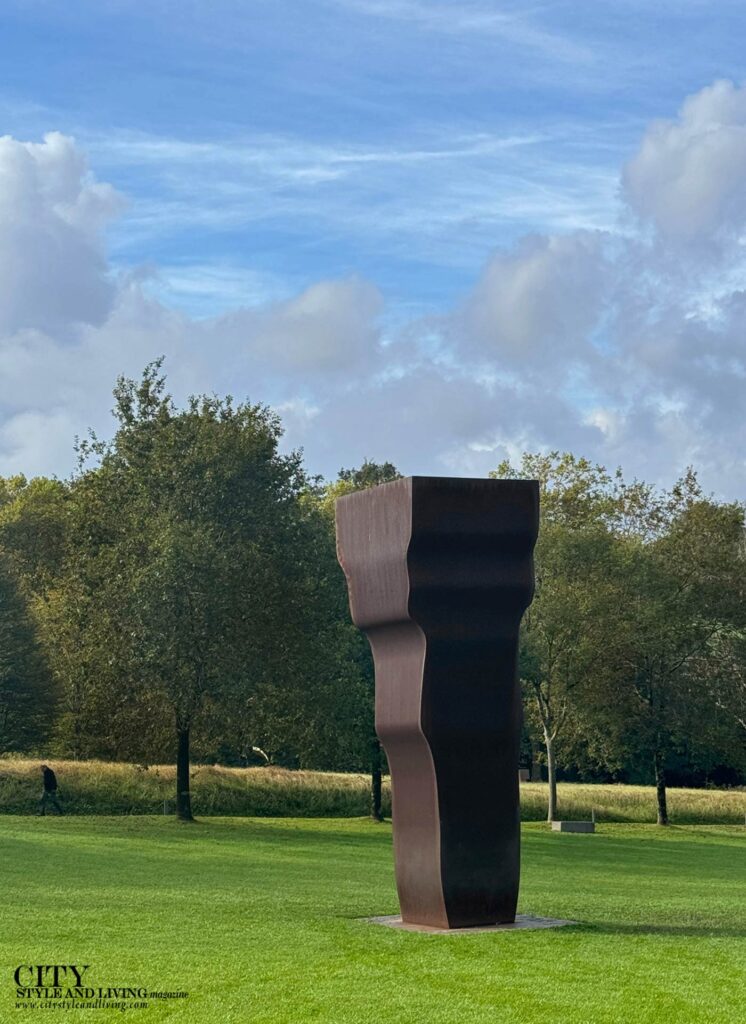
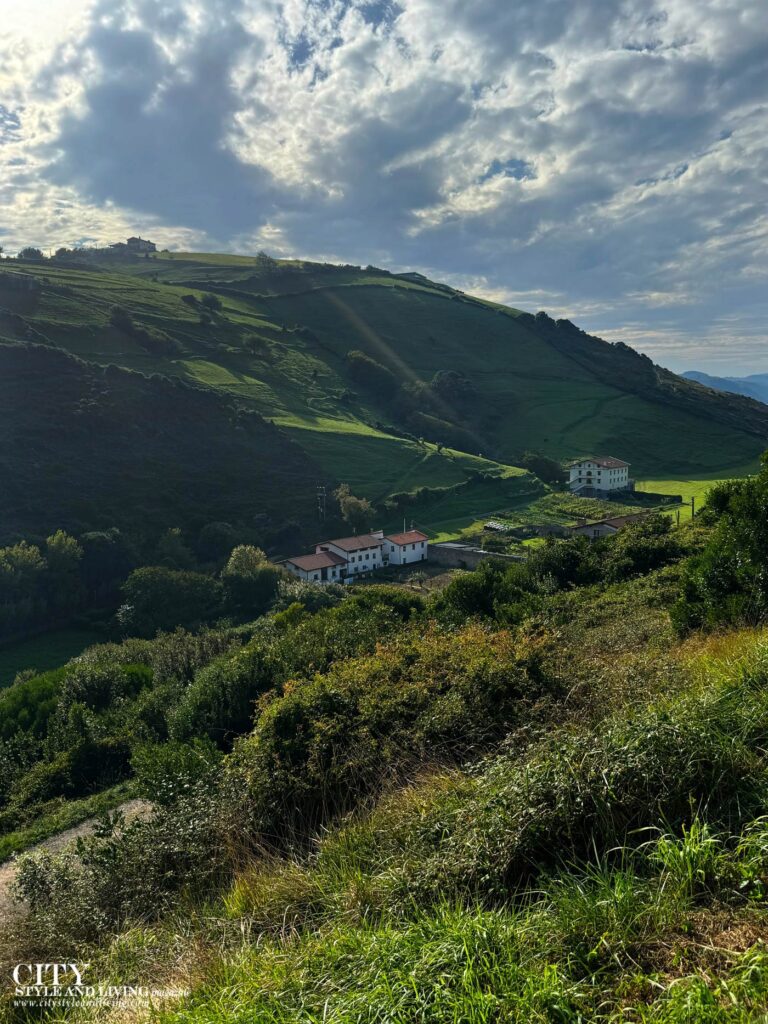
If Spain’s Basque Country were an art style, it would be chiaroscuro, what renowned artist and son of the land, Eduardo Chillida, deemed, “the dark light.” Serpentine roads thread densely forested mountains, ringed with hide-and-seek clouds, as nimble rays nudge through the dimness. Far from menacing, the sight becomes a reassuring companion during my road trip. The other-worldly aura is a poetic metaphor for the Basque Country’s historic turmoil, or, an acceptance of life’s contrasts. “I did not belong to the white light of the Mediterranean…I belonged to the dark light of the Atlantic coast,” affirmed Chillida.
Landing in the hub of Bilbao, I drive one hour east to the region’s most famous city, Donostia (the Basque name for San Sebastian). I’d initially come here – like many do – to indulge my greed for its storied cuisine, but, knew little else about the mysterious, fiercely independent Basque Country. Spanning both Spain’s northeast and a portion of southwestern France, though belonging to neither country, Basque identity is strident on the Spanish side, where the Autonomous Community is divided into three provinces: Gipuzkoa, Bizkaia and Álava.
Above everything else, it is the linguistic leitmotif of Euskal Herria, “the land of the Basque language,” that defines it. Its atypical vernacular, a language isolate of non-Indo-European origin (a 19th century linguist classified 8 dialects and 60 sub-varieties), has fueled Basque resilience. I’m told over and over again that if you speak the language, you are Basque.
“Above everything else, it is the linguistic leitmotif of Euskal Herria, “the land of the Basque language,” that defines it.”
One especially warm autumn afternoon at the Plaza de Gipuzkoa in San Sebastian, an older gentleman in a traditional txapela (beret) walks toward me saying something in Basque. Realizing I don’t speak the language, he slowly walks away. I scramble to recall one of the two words I learnt, mustering a muddled thank you, “esterrik asko.” Almost immediately, the man turns toward me, illuminated with joy, replying “ez horregatik, ez horregatik,” blowing kisses and bowing as if recognizing a lost relative. I begin to understand, spoken words are not merely communicative, but embedded fibres of fellowship.
During the 15th and 16th century, Basques were masters of the sea, travelling to Canada for the lucrative cod and whaling trade, with iron mining following in the 19th and 20th centuries. Ongoing conflict including the Carlist wars, the Spanish civil war and Francisco Franco’s efforts at supine takeover, though met with defiance, also led to a mass exodus of Basques, mainly to the New World. This constant antagonism sparked a well-publicized separatist movement but also created a sense of unwavering togetherness. Today, the region is again booming, with heavy manufacturing leading the way.
San Sebastian was once dubbed, “The Paris of Spain.” In the 19th century it was a royal resort, providing a playground for Spanish aristocracy. With its kaleidoscopic mix of opulent Belle Époque, modern and Neoclassical architecture, it is easily one of the most regal cities I’ve ever seen. Along the boardwalk, ornate white candelabra streetlamps preside over filigree railings with porthole cutouts illuminating curved La Concha beach like a picture frame. Elsewhere, Mount Ulia perches above immaculate Alderi Eider, punctuated with palms and colourful blooms. Narrow cobblestone streets in the parte vieja (old town), lead to small restaurants adorned with idiosyncratic wood-carved signs in “Harri” typeface, resembling the fourth millennium BC stone dolmens spread throughout Gipuzkoa. Compared to Paris, however, San Sebastian is without pretense – the convergence of beach and mountain, make it feel soothingly laid-back and grounded, and, the people too, have a down-to-earth nature.
That’s not to say that it’s backward-looking. Take Rafael Moneo’s modern cubes at the Kursaal Congress Centre and Auditorium which contrast the bright, turquoise Art Nouveau pillars of Zurriola Bridge. Age-old traditions seamlessly coexist with contemporary taste. And, that mix is true of the region as a whole. “Our roots are Basque, but our branches are open to the world. We try to adapt…continuing to learn from others, innovating and seeing new things,” says Alex Oier, the young co-owner of Bixigarri Gastroteka, in Errenteria, a short drive from San Sebastain. Together with two of his friends (including chef Imanol Lasa, who trained with chef Gorka Txapartegi and avant-garde Spanish chef, Dabiz Muñoz), he opened the fashionable fusion restaurant two years ago, reviving a quiet part of the town. Bespoke flavour combinations and playful touches include beetroot marinated mackerel with grapefruit, and, mojito-compressed watermelon and aerated apricot cream hidden under a jelly disk.
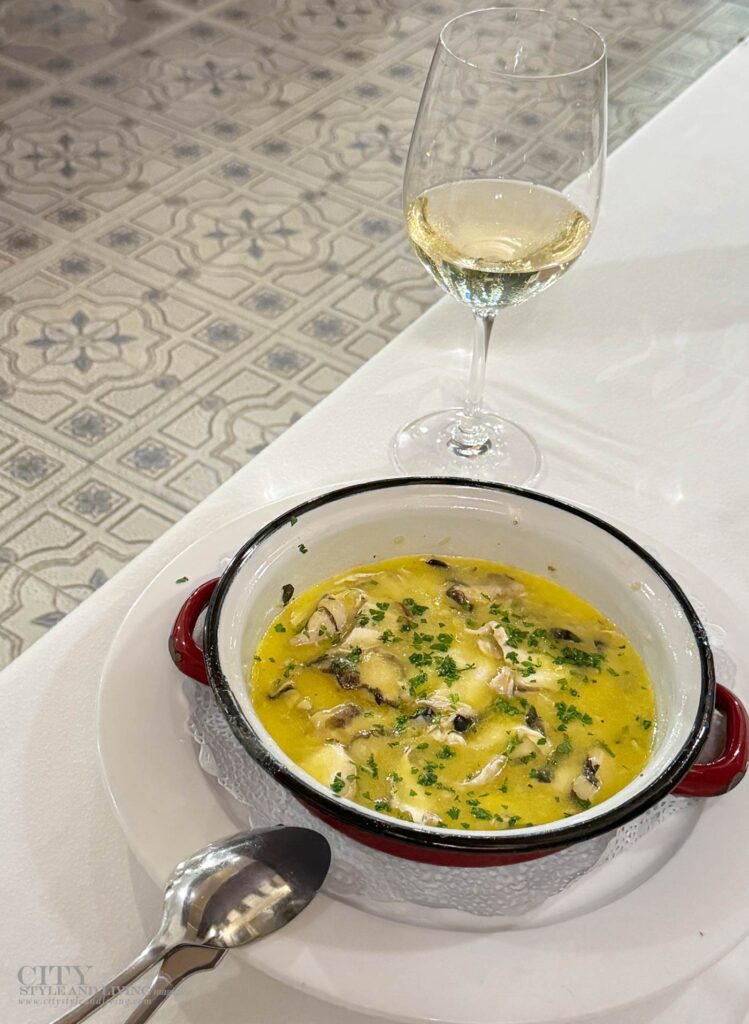
Of course, you can’t step a block in San Sebastian without a food sighting. Despite its scant 200 000 inhabitants, the city boasts amongst the most Michelin stars per capita, anywhere in the world. Pintxos bars, casual eating spaces serving snacks on skewers or bread, seduce passersby with rows of neat displays. I can’t resist the customary txikiteo (bar hopping) ritual, stopping for Gildas (skewered anchovies, olives and guindilla peppers) and mounds of creamy baccalau (cod fish) washed down with cider. At Bertakoteka, I grab pimenton-dusted pulpo (octopus) draped over sliced bread, before sitting down at Muxumartin for warm scallops with green curry and wakame followed by a refreshing mineral-forward txakoli, the emblematic regional white wine.
From small neighborhood shops to polished La Bretxa and San Martin Market, the seafood – merluza (hake), rape (monkfish), and rodaballo (turbot) – is fresh and unrivalled. Whether humble or dear, treasured gifts from sea and land are societally worshipped. Seasonal green gernika peppers are celebrated with luscious egg yolk, minuscule anchovies anointed with golden olive oil, enormous T-bone steaks evenly caramelized on the grill. With innate understanding and respect for provenance – the toil of the fisherman, braving the tumultuous sea, the back-breaking work of the farmer tending to crops or animals – it is often the very juxtaposition of ingredients that makes a dish.

A ten-minute drive from San Sebastian lies the port town of Pasaia (comprising Pasai San Pedro, Pasai Donibane, Antxo and Trintxerpea). Overlooking its namesake bay, and set between the Ulia and Jaizkibel mountains, the narrow, storybook, “Venice of Spain” oozes maritime history from each inch of its bridge houses and lone cobbled street. In Roman times, iron was transported from its harbour, during the 16th and 17th centuries, with its accessibility to New World routes, it became the epicentre of the whaling and shipbuilding industries.
The Marquis de Lafayette departed here for America to fight for independence, and Victor Hugo penned En Voyage: Alpes et Pyrénées after a short stay here in 1843, where he fell in love with its sheer beauty and people. Countless writers and artists, from explorer Elcano to fashion couturier Cristóbal Balenciaga, have succumbed to Pasaia’s charms. It’s easy to see why. At sunrise, I sit on the balcony of my room at Hotel Donibanea, a characterful 18th century fisherman’s home turned 7-room boutique hotel, gazing at the deep blue water and listening to the rhythmic call of a female rowing team.
“I am a dreamer,” says Xabier Agote with a glint in his eyes when I meet him at his shipyard-museum-school in Pasai San Pedro. Agote is founder and president of The Albaola Maritime Culture Factory. Its landmark project is reconstructing an exact replica of the San Juan, using the same techniques and similar materials used to make the original. That’s no small feat, given that the Basque whaling vessel, sank off Red Bay, Newfoundland, Canada in 1565.
Growing up in San Sebastian, Agote was always fascinated by the sea. “I used to spend a lot of time in the harbour watching the fishermen. Eventually, I decided to build boats because the old wooden ones were being replaced by plastic.” After a stint in the U.S. at the Maine Maritime Museum, learning age-old shipbuilding, he returned to The Basque Country with a single-minded life mission – to reconstruct the San Juan. It’s become a decades’ long odyssey.
Beginning in 2013 by himself, Agote eventually assembled a like-minded crew, many of whom he trained, “because the knowledge was long lost.” All the timber was donated by the villages of the Sakana forest. “It’s a very touching moment when people offer you help.” The first project of its kind in the world, it has since become a symbol of UNESCO’s Protected Underwater World Heritage. Agote plans to sail the ship back to Canada in 2027, with manpower alone, even eating as they did centuries ago.
When I finally lay eyes on the mammoth, little imagination is required to visualize the ship commanding the high seas. Stepping inside the hull is a rare privilege – oak vertebrae are precisely bent and clinking metal reverberates with the visceral passion of hundreds of thousands of work hours. For me, Agote’s dedication to preserving maritime history is a profoundly meaningful love letter to the congruence of past and future.
“The intoxicating smell of smoke and grilled meat above the crackling fire of asadors, sepia sunsets dancing across medieval tower houses, gentle winds whispering tales from the sea, the vibrant upbeat colours of fisherman’s houses. Each, a spellbinding lesson in undistracted presence, or poliki-poliki.”
Early the next morning, I take a cooking class at Bistrot Ziaboga in Pasaia Donibane. Much of traditional Basque cuisine is based on simple, easy-to-prepare dishes. Thanks to their prevalence at txokos, private cooking, socialization and gastronomic clubs, the region’s culture withstood Franco’s attempts at erasure. They are also the backbone of home cooking and still inspire everything from tasting menus to bistros.
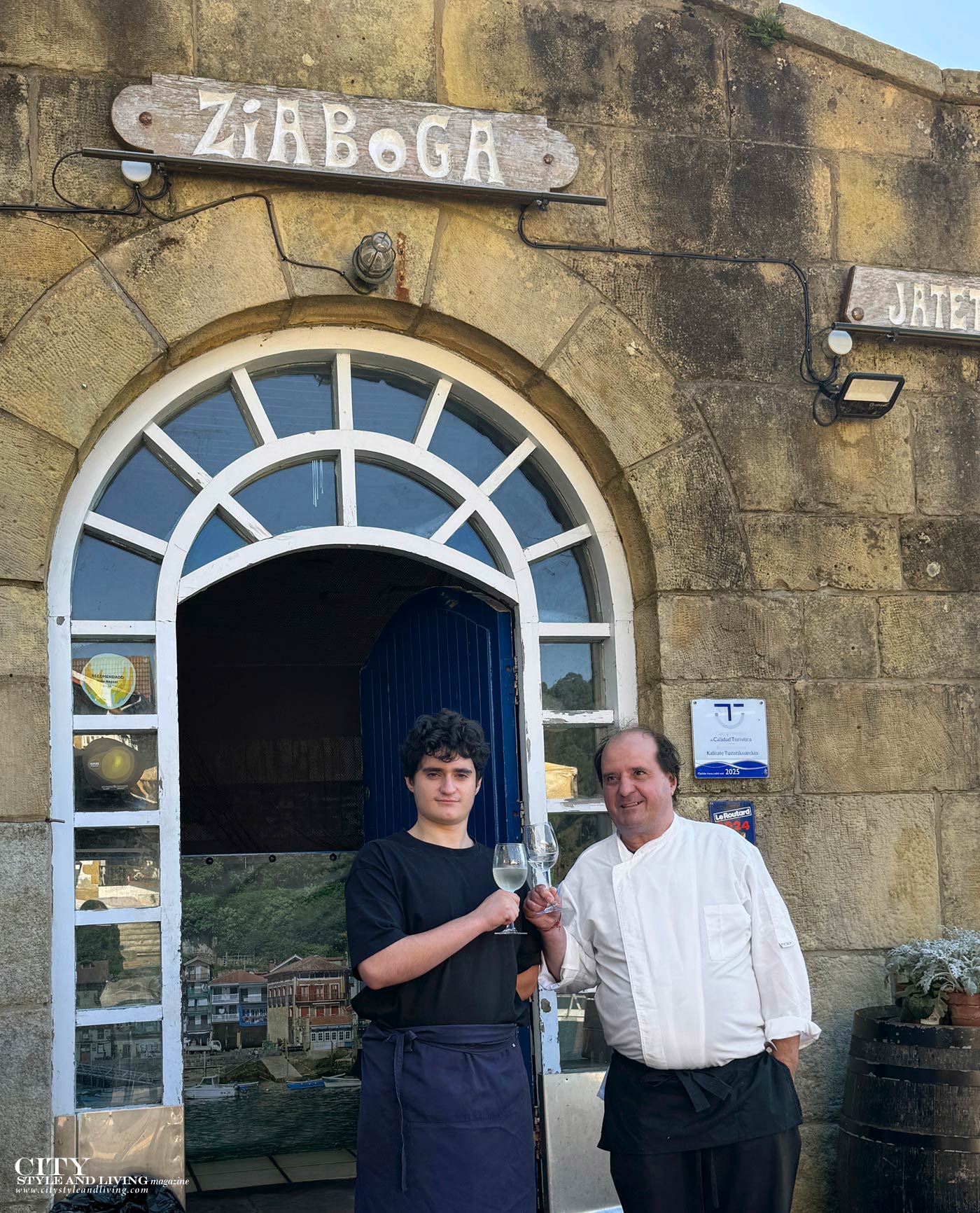
I cherish a recipe over a souvenir any day. Possibly sensing this, chef proprietor Alex Barcenilla is a patient coach. Alongside his son, Alex Jr., a proficient translator, we prepare a variety of seafood for lunch. “Cooking is not about adding precise measurements. You have to listen, you have to become one with the ingredients, and feel what the dish needs,” says chef as he guides me. Each step is garnered from years of experience and comes with a reason: txipirones, small squid, are cut lengthways, exposing a greater surface area to frying (translation: crispier than rings); to add creaminess to a stew, potatoes are cracked, instead of sliced and plopped into a marmita, the pot used by fishermen at sea; and when caramelized fond reaches a precariously dark colour, chef intercepts, “this is not burnt, it’s colour and flavour.”
My table sits at the water’s edge, offering panoramic views of everyday life – tables full of families happily chatting and chomping away, children playing street soccer in the square. I scarf down a plateful of crisp rabas (fried squid), their sweetness and soft texture unlike the rubbery fried snacks I’m accustomed to. Comforting marmitako (stew) with chunks of tuna and soft potato, is a hug in a bowl. As Alex Jr. pours cider and chilled glasses of txakoli, Nuria, his mother, carves grilled rape (monkfish) scattered with bronze garlic slices, peppers, olive oil and vinegar. We end the meal with a well-made apple tart, toasting with shots of patxaran, a local wild plum liqueur.
At just under 2 000 square kilometers, Gipuzkoa, Spain’s smallest province, is endlessly explorable and feels authentic because of the absence of mass-tourism. Stone houses with wooden timber frames lead through lush oak and beech forests, and medieval villages perch above quiet fishing villages. Compared to San Sebastian’s coastline, The Basque Highlands emotive landscape evokes North Wales or Scotland. In the sweep from Goierri and Tolosa to Zumaia, and Hondarribia near the French border, rugged yet verdant terrain gives way to a constant shadowy fog, making trees, along impossibly steep hillsides, become apparitions.
Much of Basque culture is anchored in historical rural life. Vestiges show up everywhere like in the still-popular unique, Ironman-style sports, herri kirolak. These include stone lifting, wood chopping, and a kind of hard-core baseball, pelota, where players wrap their hands and throw leather balls.
It is in the countryside where, with each new word, bite and glimpse of the landscape, the Basque enigma, slowly sharpens into focus, differences loosening from their beguiling starkness. Basque culture is alive here. Passing through Mutriku one Sunday, it seems as if the whole town has come out to eat and drink and socialize in the local square. I realize that gastronomy is a celebration of life in Basque Country, with communal revelry at its core.
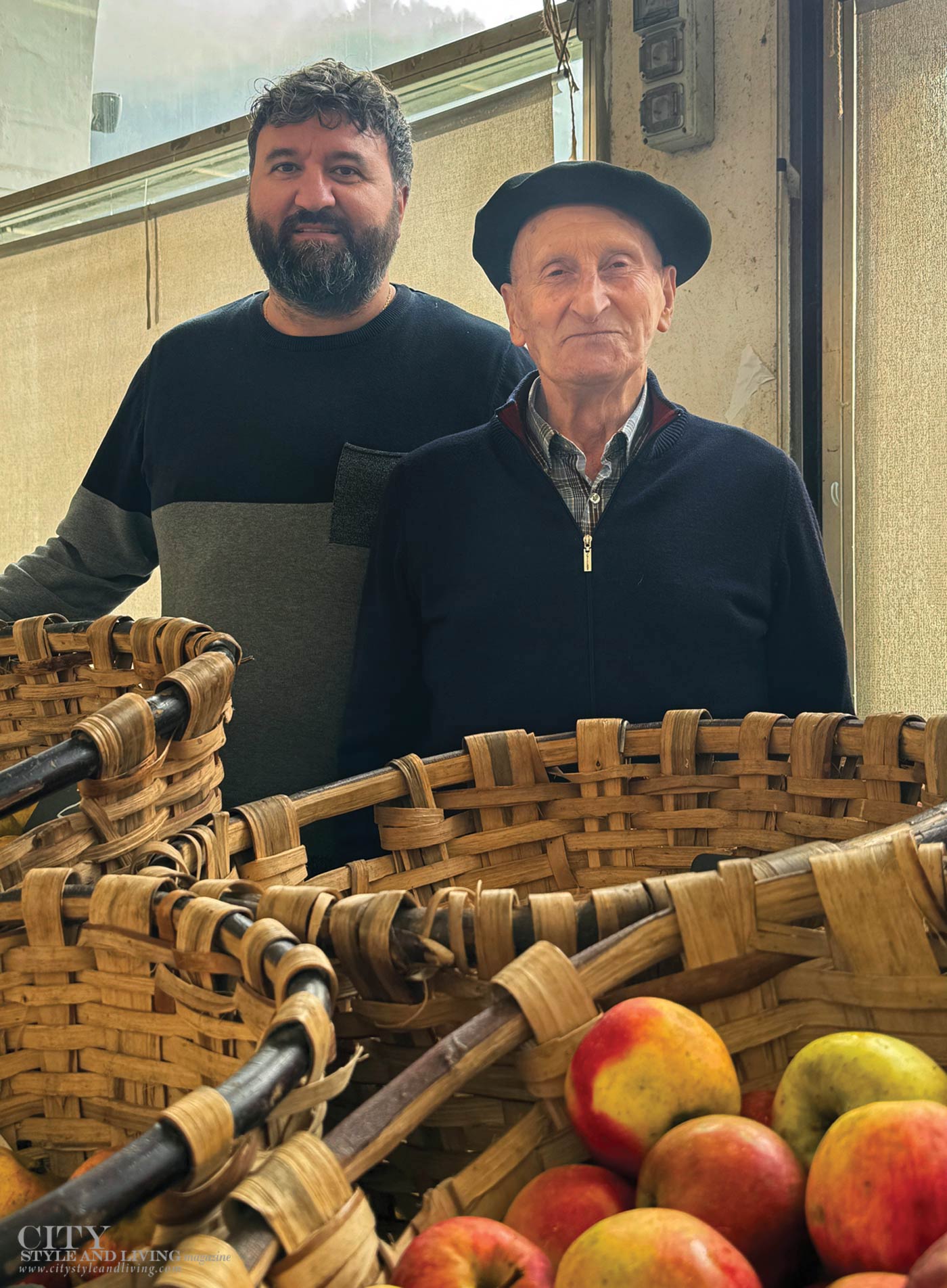
Cider runs through the Basque bloodstream. The inherent theatre of pouring amber liquid at a height, obscures its life-or-death significance. It was sagardo (cider), with its high vitamin C concentration, that saved sailors from disease during months-long journeys at sea. And, though production methods remain straightforward – grow, pick, press, ferment – using accepted wild apple varieties like moko, goikoetxea, errezil and txalaka, the work is not for the faint-hearted.
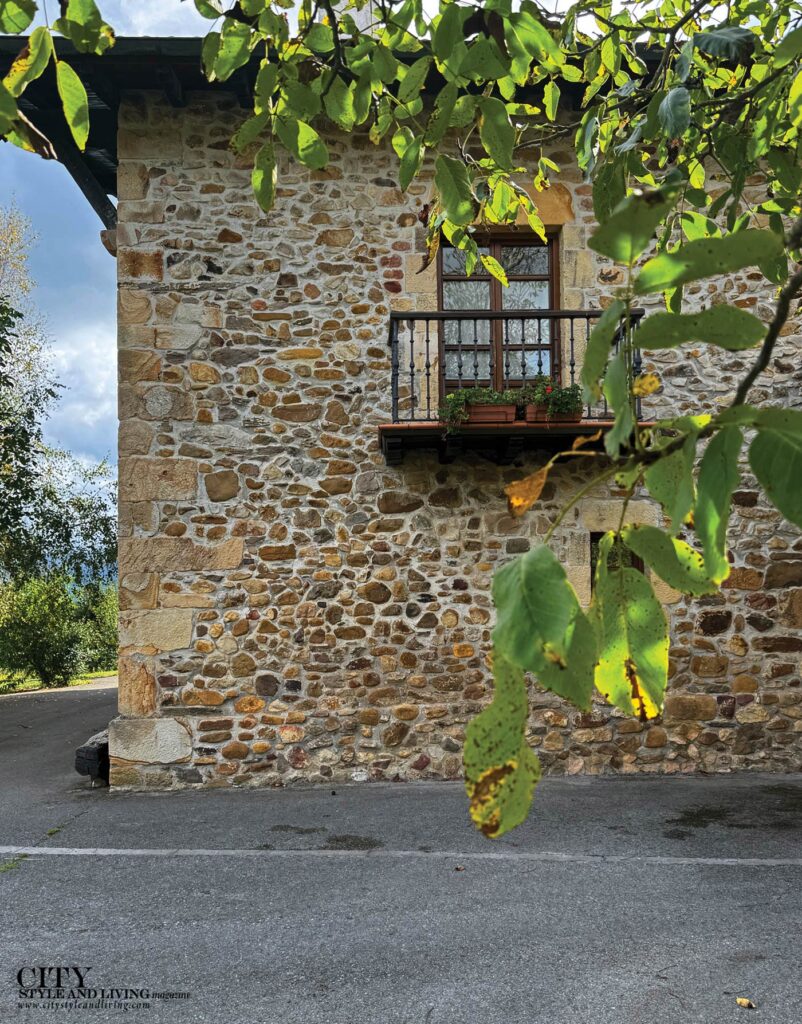
“All of the cider houses around here are literally picking apples with their hands. It’s very hard work,” says Maddalen Olmedo, commercial director of Sagardoa Route, as we drive to Zerain, a small town in the Aizkorri mountain range in Goierri (the highlands). That’s where husband and wife team, Haritz and Maite Eguren of Oiharte Cider House, have turned their multi-generational organic farm into a popular agrotourism spot. “Maite doesn’t like to take credit, but I would say she has one of the best palates in the region. I’ve learned so much from her,” adds Olmedo.
When I arrive, Maite is busy cooking in the kitchen while Haritz hosts a large group, stopping periodically at my table to check in. Natural fermentation and the absence of sugar or yeast are discernible differences between Basque and North American, English or French cider. When I take my inaugural sip, I’m reminded of citrusy kombucha, with its racing acidity and distinct funk. It pairs perfectly though with stewed vegetables and chunks of cod in tomato sauce.
“…there is also the arima of a town or market. This place we are in now has an arima, an alma, a spirit that brings us back.”
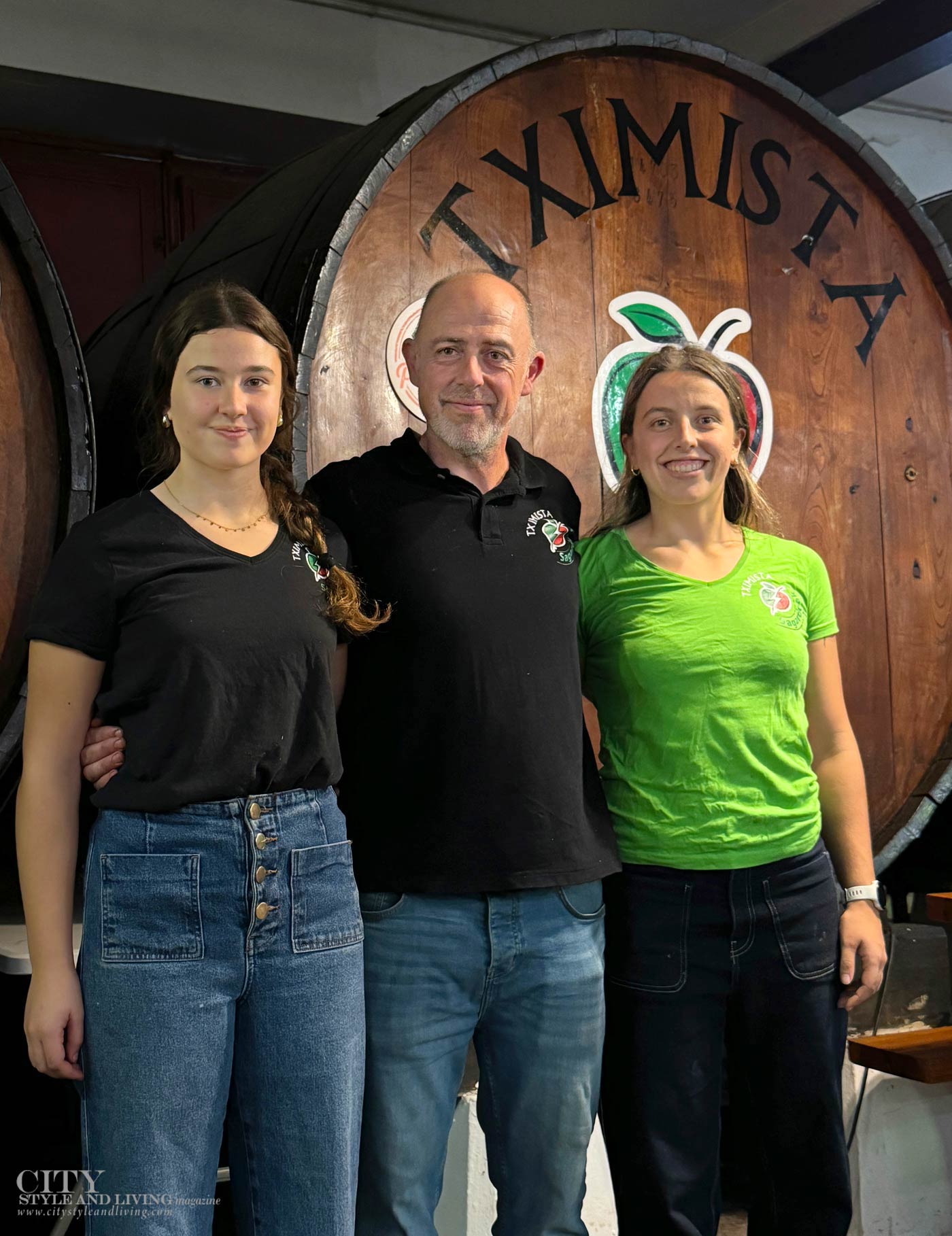
In nearby Ordizia, my guide, Ion Ubide Ibarguren, introduces me to another sagardotegi (cider house). At Tximista, driven by a mission to keep history alive, owner Aitor Esnaola Gaztañaga works a full-time job, next to running the business with his daughters. Long rustic wooden tables invite conversation, between calls for txotx (the opening of the spigot so that the cider jumps from the oak barrel to the glass). And, as we eat and drink, Ubide and I become fast friends with his encyclopedic knowledge, affability and frankness.
Ever egalitarian, each cider house offers a similar menu: omelette, cod, and txuleta (prized T-bone steak), always ending with Idiazabal cheese, walnuts and quince jam. But it’s the spontaneous song, in choral unison, by a group from Navarre, that adds unexpected joy and resonance to my visit. In the Basque Country, cider is not merely a drink, but liturgy.
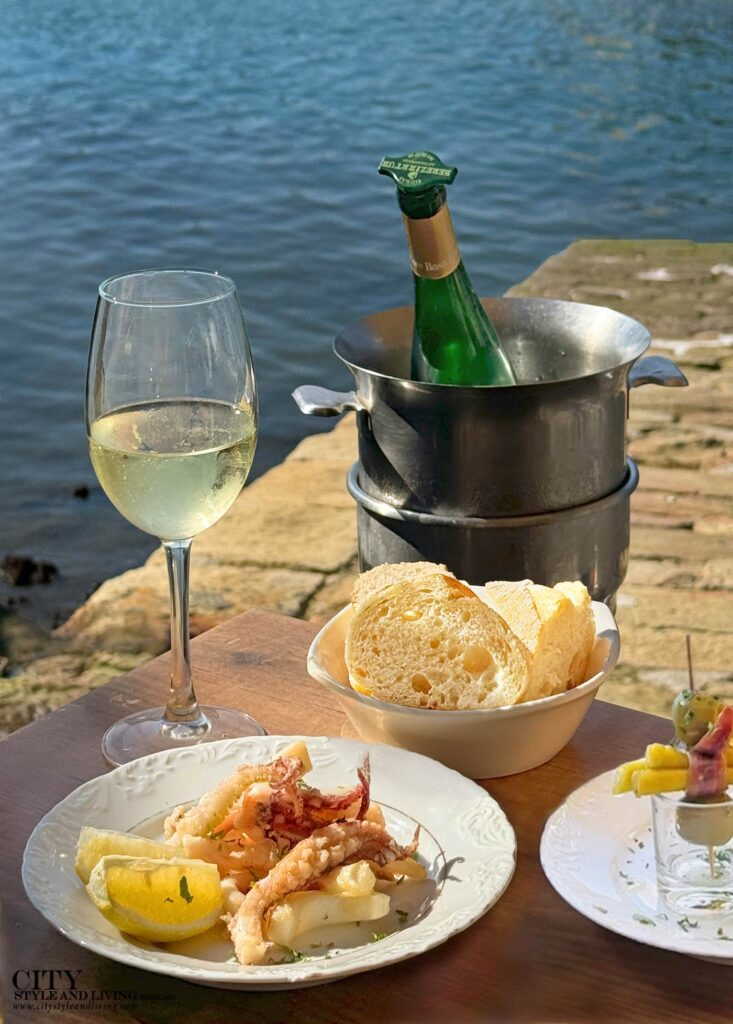
Wednesday has been market day in Ordizia since 1512. Autumn’s bounty comes in the form of double-fisted Boletus mushrooms, medlars the size of tennis balls, and inky beans piled in wicker baskets. A vendor selling rounds of what looks like a large yellow doughy cake, catches my eye, and Ubide immediately recognizes it as talo, a moist tortilla-like bread brought from the Americas, once a staple in rural areas. “I haven’t seen this at this market for years. My kids and I did a talo making workshop together at Christmas,” he chimes with excitement.
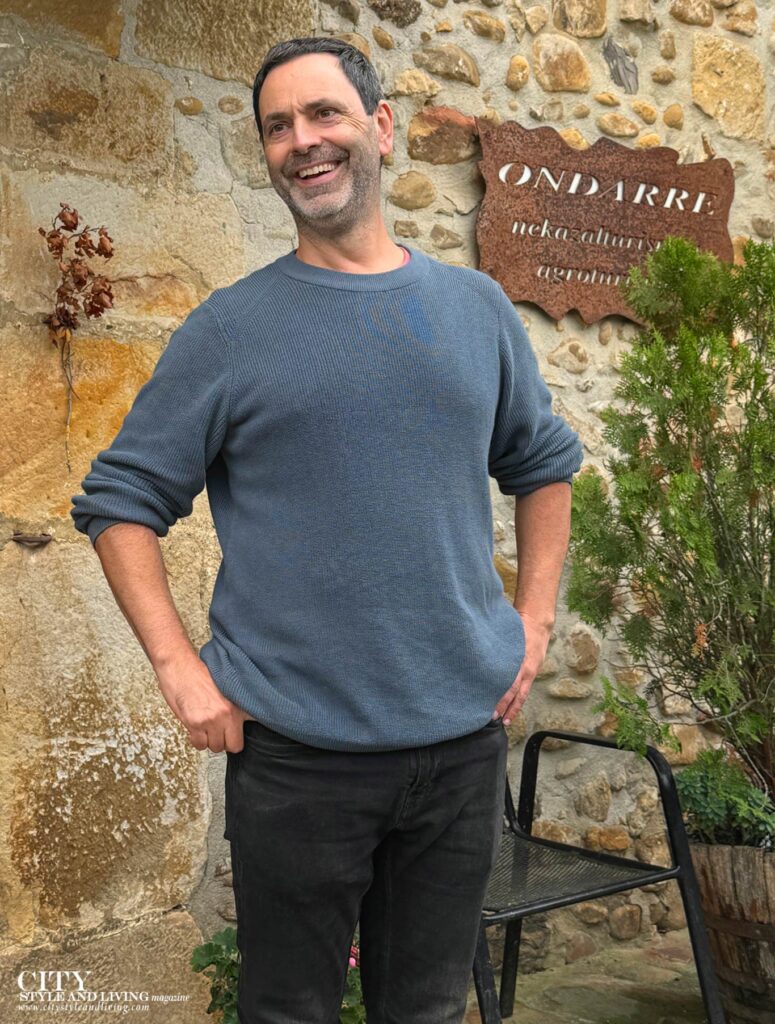
Later, at Ondarre, an award-winning artisanal Idiazabal D.O. (Protected Designation of Origin) cheese farm and agroturismo in Segura, Ubide introduces me to Eneko Goiburu Murua, a young shepherd, whose family has been making cheese here for five generations. Affixed outside the entranceway is what appears to be a dried sunflower with thistle-like leaves. “It’s on all the doors around here, to protect the houses,” says Goiburu matter-of-factly, of the esquilore, a plant of ancient mythological significance that grows high in the mountains. “Every ten years, my father will go to collect one in July or August. They’re endangered so you have to get special permission.”
Idiazabal is the time-honored cheese of the region. The delicate nuttiness and sharpness go hand-in-hand with cider, forming a quintessential taste of place. And, Murua continues to make his cheese according to highly regarded custom. “One hundred years ago, everyone made cheese like this, now we continue the tradition…” he proclaims, referring to the enzyme-rich, small, shriveled stomach of a long-haired latxa lamb he still uses to coagulate the milk.
His adherence to tradition is highly sought after. At one time, a half round of Ondarre cheese fetched a record-breaking 13 000€ at regional auction. Next, I’m led to a bespoke outdoor smoker, where cold smoking serves as a preservation method. It was once how all Idiazabal was made. “My family is a little pagan, so we use stinging nettles to cover the cheese,” he says casually. It’s the first time on this road trip that I sense the mystical quality of ancient Basque culture. It’s inconceivable to me that this steadfast marriage of folklore and technique could have vanished.
As the nationalist regime fell in the late 1970s, so began a Basque renaissance. Art and culture surged. At its vanguard, gastronomy, freed Basques to reclaim their identity, bringing the world with it. This renewed vision – New Basque cuisine – was the doing of two young chefs, who riffed on traditional Basque recipes while taking inspiration from France’s Nouvelle Cuisine. Eventually they opened restaurants to international acclaim.
One of the founding fathers of this movement, Pedro Subijana, also became the major driving force behind the creation of The Basque Culinary Centre in San Sebastian, a nucleus for global food innovation. Akelarre, his pristine Relais & Châteaux, Michelin-key hotel, minutes from the city, is my luxurious temporary abode while in the region, and amongst the most beautiful on the planet. It boasts two restaurants, including the signature three-Michelin-star icon. The name, roughly translated as, “a witches gathering place” features unquestionable alchemy, and there’s a majestic quality in dedicating one’s life to country.
Before the fine-dining focus though, traditional eating houses, casa de comidas, were hallmarks of rural areas. And, just off the highway in Zestoa, near Zumaia, thirty minutes’ drive from San Sebastian, I arrive at Asador Bedua, greeted by owners Marian and José Marí Iriondo. With a romantic fairytale-like setting, alongside the Urola river, the building itself was a former 15th century market hall. As one of the only connecting points between Zumaia and small inland villages, it was a fitting place for refreshment in medieval times.
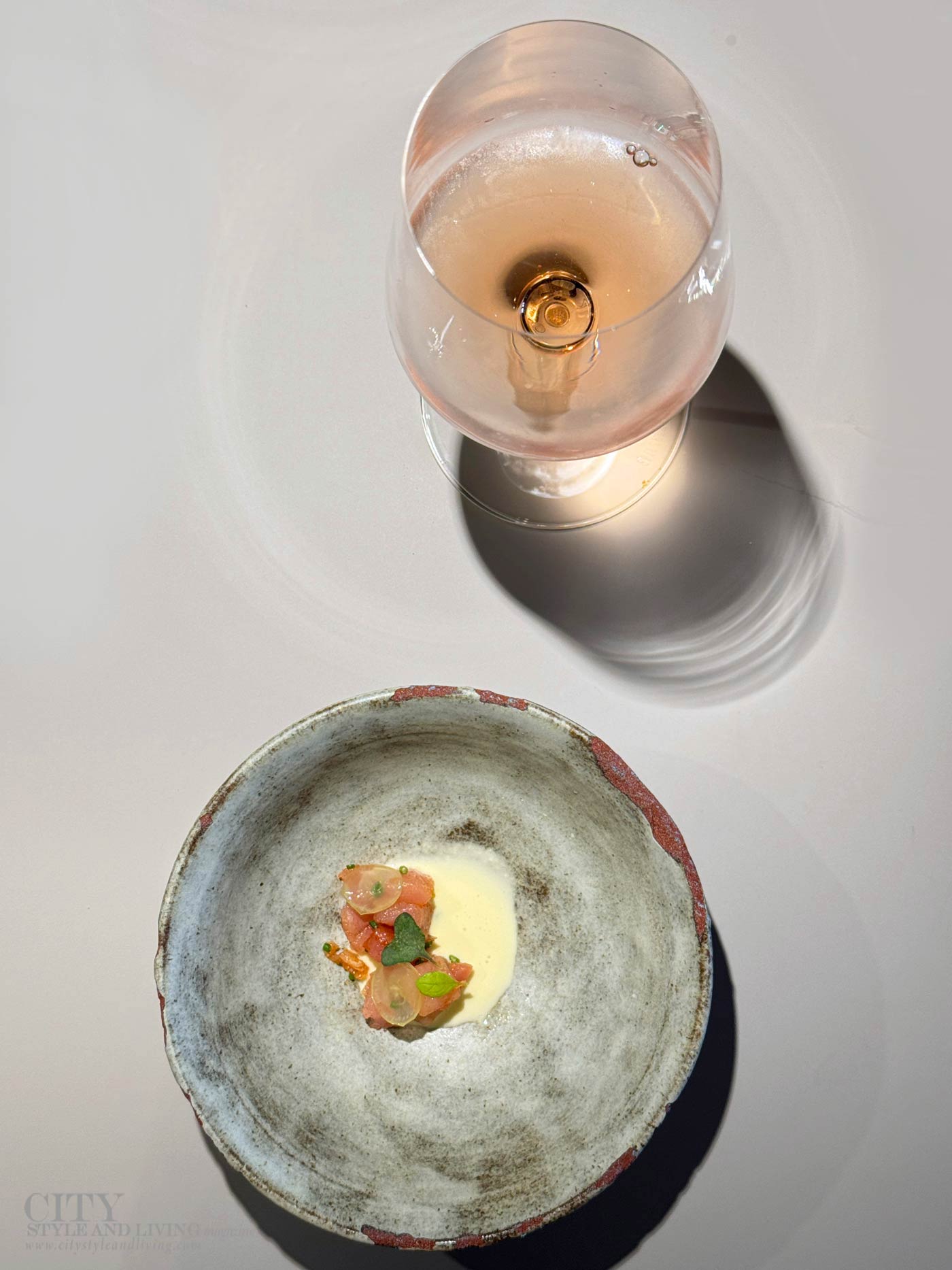
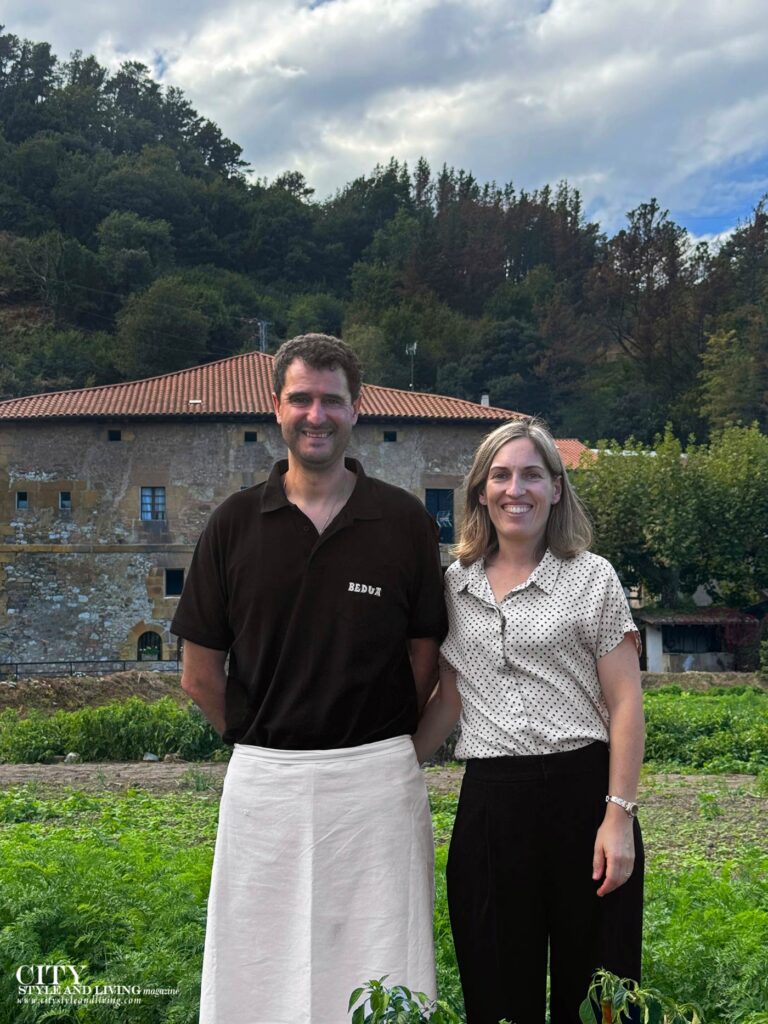
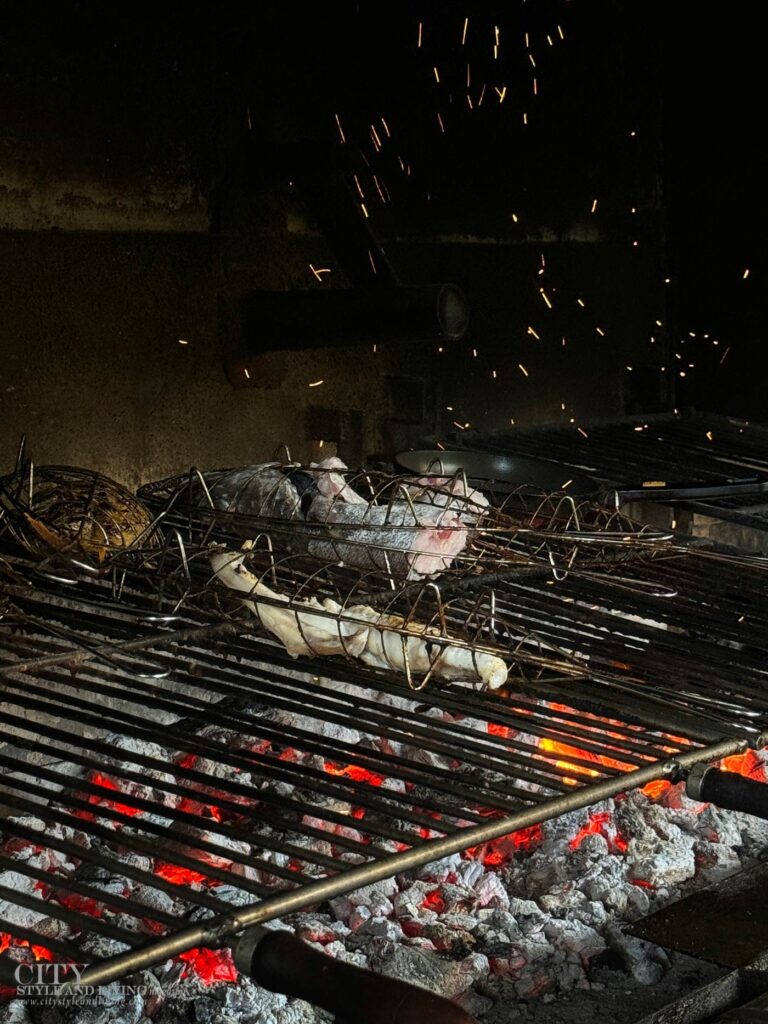
By 1948, Marian’s family had begun serving potato omelettes and grilled peppers to locals who were still arriving through the estuary by boat, later developing the site into a full-fledged family-run restaurant and grill. Asadors obsessively tend to the heat to achieve the ideal temperature for each specific ingredient. It’s immediately obvious that José Marí is an artist of fire.
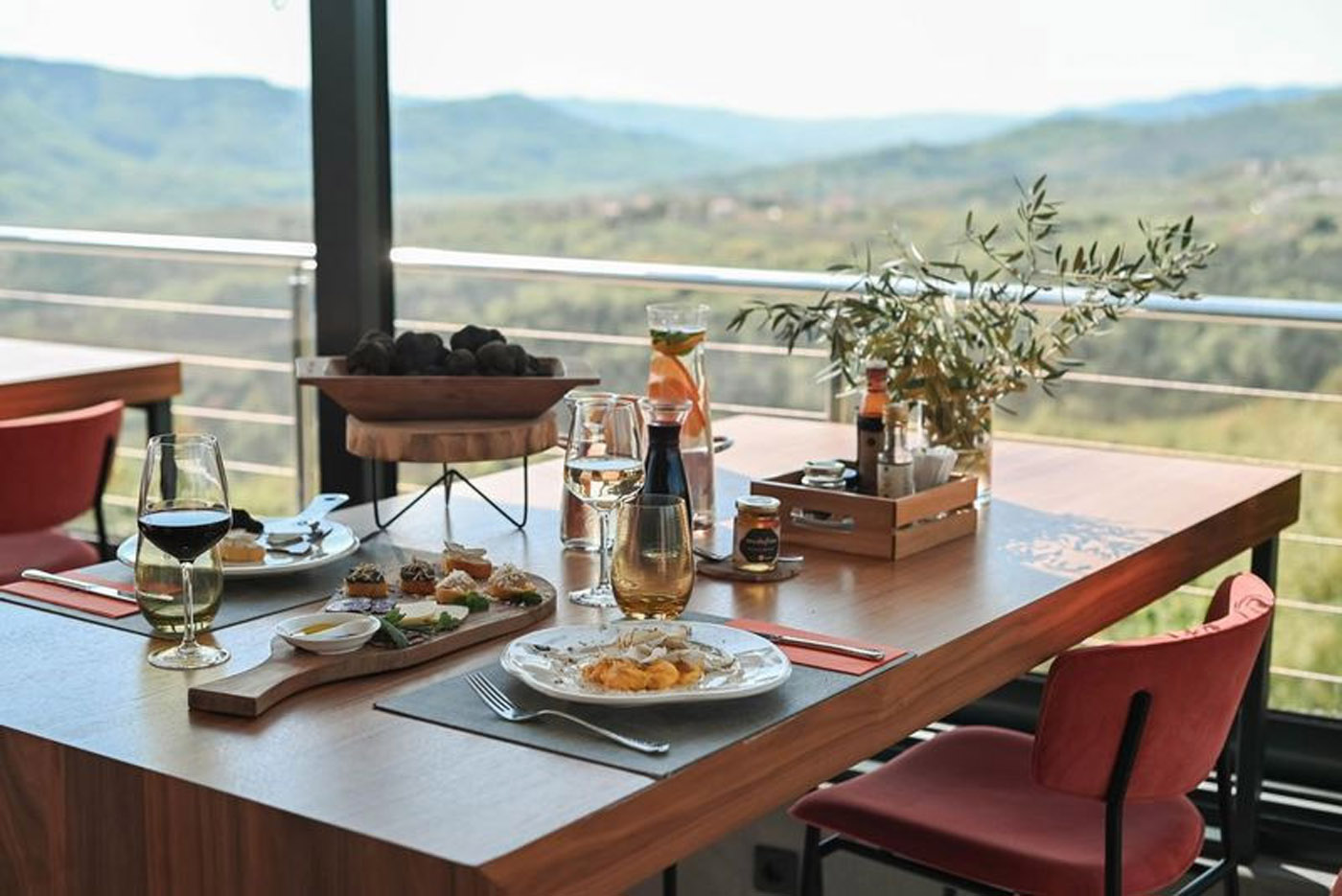
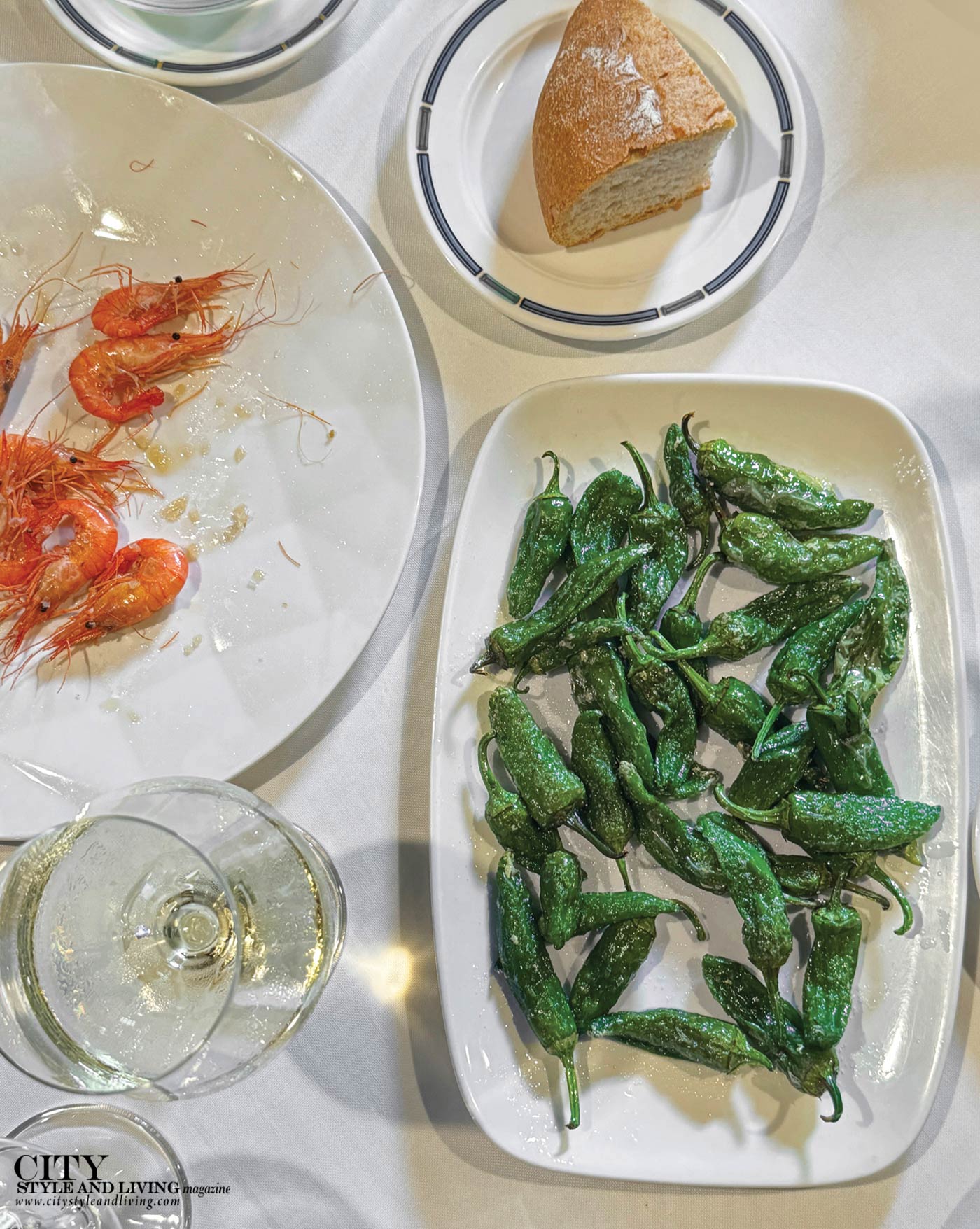
Lunch is a masterclass in simplicity, worthy of starred accolades. The compulsory omelette (served the same way for decades) is fluffy and light; this is followed by small, bubblegum-pink, salt-sprinkled shrimp, crunchy and sweet; and a plate of gently blistered peppers, mildly bitter and addictive. I marvel, as my waiter, Charles, meticulously fillets a whole turbot tableside in minutes, not a trace of flesh left on the bone. Puffed paper-thin skin demonstrates a deft hand. The fatty flesh, bathed in a vinegar and olive oil emulsion, forms a faultlessly balanced sauce. It’s easily one of the best meals I’ve eaten.
Later, Marian walks me across a Roman bridge to a small island where the storybook garden is laden with lettuce, peppers and vegetables bound for the kitchen. “When it’s busy, I work almost 24 hours, non-stop,” says José Marí pulling a bunch of perfectly imperfect carrots he grew, from the earth. He is both gardener and cook, and when the restaurant is busy it leaves little time for home life. Such sacrifice hasn’t gone unnoticed. Repeat customers fill the restaurant daily, reminiscing about time spent at this cathedral of excellence.
To cap off my road trip, I drive to Bidania-Goiatz, south of San Sebastian, near Tolosa, home to Iriarte Jauregia Hotel and chef Enrique Fleischmann’s Michelin-star gem, Restaurant Bailara. The restaurant plays on his Mexican foundation and Basque tutelage (Karlos Arguiñano’s Aiala school, and Akelarre among others). With just five tables, service is intimate, and Ina Dimitrova Tomanova and son, Alejandro, command the space with a dance of expertise and whispering delicacy.
Razor sharp precision and minimalist presentation, belie deep flavour: potxas, creamy white Navarra beans, are transformed into a stew topped with finely diced eel; canary yellow egg yolk coats xixa hori (chanterelles) with pine nuts and tangy Idiazabal cheese; and tender sweet figs balance tangy mascarpone ice cream. Each bite of my 8-course tasting menu, roars with the pride of the brigade of chefs that lovingly made them.
As mid-day turns to afternoon, golden dappled light illuminates the valley outside. “My village is only 500 people. Every day, I wake up to this mist. It reminds me of where I’m originally from in Bulgaria,” Tomanova gestures toward the bucolic scene before continuing. “I wouldn’t change this for anything.” Along with her Basque husband, she’s lived nearby for 20 years. Her absolute satisfaction is rare.
Seconds later, she lovingly grabs my arm like a childhood friend, leading me on a kitchen and hotel tour, before we are back in the dining room. Overwhelmed by unspoken resonance, although few words are exchanged, my heart hums. Such pure sincerity, care and kindred spirit is deeply-rooted in each corner of this terrestrial haven, and embodied here at Bailara. The entire experience reminds me of Victor Hugo’s reflection: “He who has seen the Basque country wishes to see it again. It is the blessed land.”
Over weeks, I’ve witnessed a surprising reversal of my reductive suppositions. I hadn’t imagined that a place so bruised by the past, could firmly grasp tradition in one hand, and have the other still open to the world. Arguably, it’s a place compelled to obstinance, not for ego, but societal self-preservation.
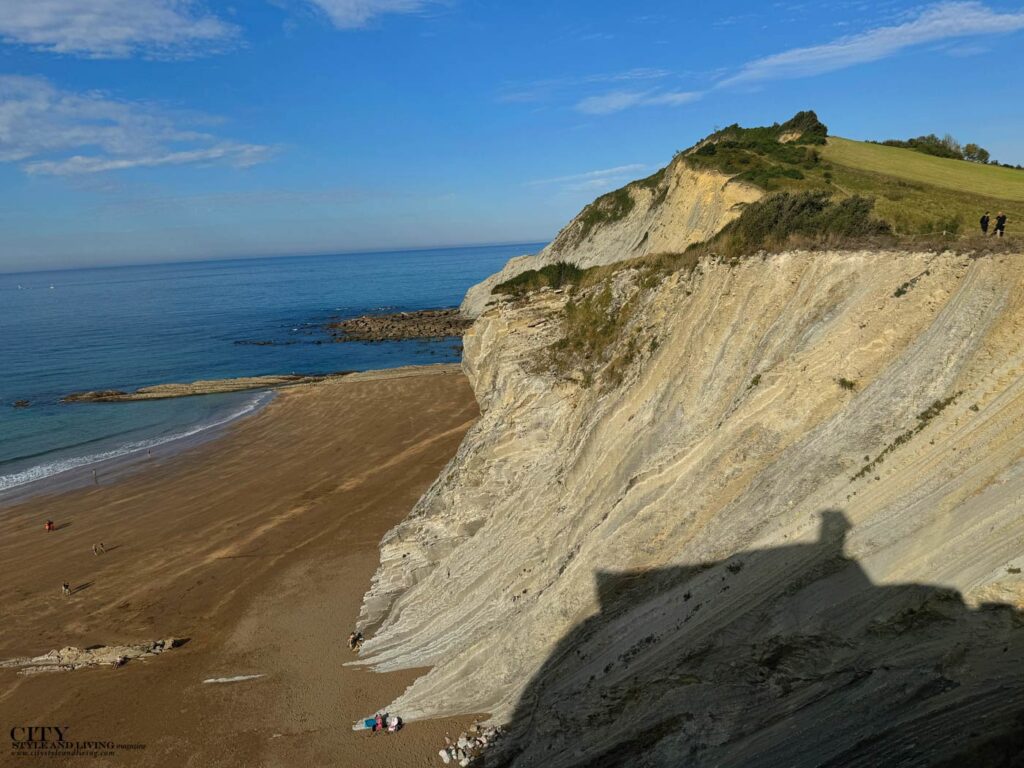
The Basque Country feels like a time capsule, perhaps, but not a relic – where a broken handshake means an abandoned promise, character is built by uplifting others, and family is a fellowship, irrespective of blood relation. From physically pronounced landscapes, like the serrated-edge Flysch coastline, and pristine high-altitude vineyards overlooking verdant valleys, to golden crescent beaches, multi-sensorial feelings are inescapable. The intoxicating smell of smoke and grilled meat above the crackling fire of asadors, sepia sunsets dancing across medieval tower houses, gentle winds whispering tales from the sea, the vibrant upbeat colours of fisherman’s houses. Each, a spellbinding lesson in undistracted presence, or poliki-poliki as it’s known.
I recall a conversation I had with Ubide as the haunting, melodic, old folk tune sung by strangers roused the cider house. “Arima is everything. For the religious, you could say, ‘I remember my grandmother, and her arima is here.’ But there is also the arima of a town or market. This place we are in now has an arima, an alma, a spirit that brings us back.”
Euskal Herria is a soulful, dark light. With their intrinsic communal bond and openness, there are interminable signs of buttressed protection from looming darkness. An ancient language, safeguarded by school lessons and spoken by young and old. Ever-evolving gastronomy, balancing heritage and progress. The mountain flower still defending homes. Even the cloud veils embrace the peaks, like brilliant armor.
This original article first appeared in the SPRING 2026 issue of City Style and Living Magazine.
Get More Inspiration
from City Style and Living